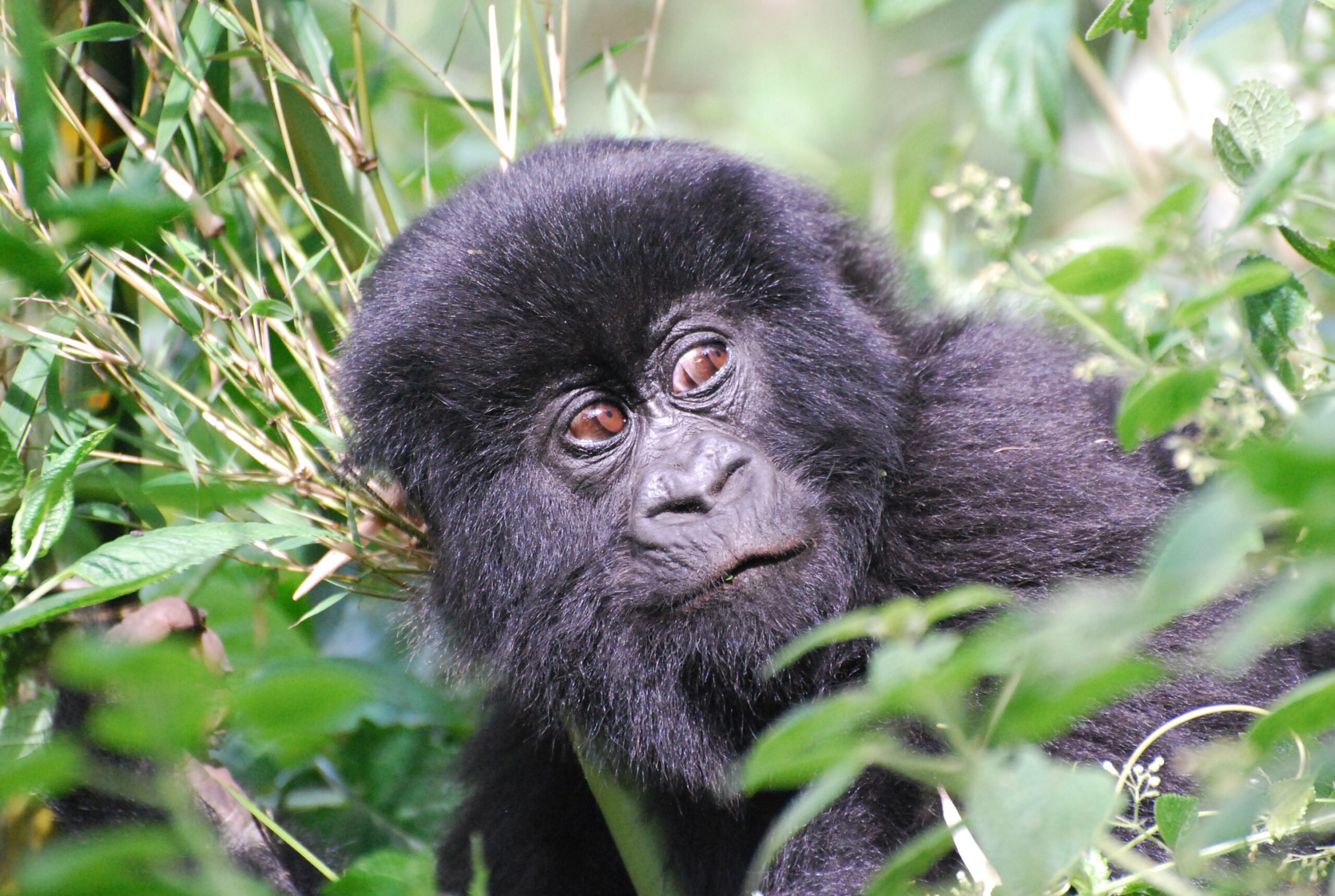
Mountain gorillas live in close-knit family groups led by a dominant male known as a silverback, whose strength and wisdom maintain order and protect the group.
Dr Jean Felix Kinani Sangwa the Founder of One Health Approach for Conservation- (OHAC) -Gorilla Health said
“Mountain gorilla leave in groups even some lone silverback movies around and are trying to form a family by interacting with other groups, the objective is to get females and form an other family. A gorilla family can have one or more silverbacks, adults females’ , blackback, juveniles and infants”.
These families, often made up of 10 to 30 even 50 individuals. Gorillas share deep bonds, marked by grooming, playing, and close emotional ties”.
Reproduction: A slow and precious cycle
Unlike many species, mountain gorillas reproduce slowly. A female typically gives birth to only one infant every three to four years, and the survival of that infant depends heavily on the protection of the group. This slow birth rate makes every life sacred and emphasizes the importance of sustained conservation efforts.
Mountain Gorilla twins are a rare occurrence. Dr Jean Felix took care on the first baby twin mountain gorilla who survive in the chain. Their survival is even more exceptional and first notice in the Volcanoes National Park in Rwanda with the Susa Group’s twins, Byishimo and Impano, being the first to survive to survive to adulthood under our care.
Infant gorillas cling to their mothers for several months, learning not only how to survive but how to live in harmony with the group. As they grow, they are nurtured by the whole family, forming emotional bonds that last a lifetime.
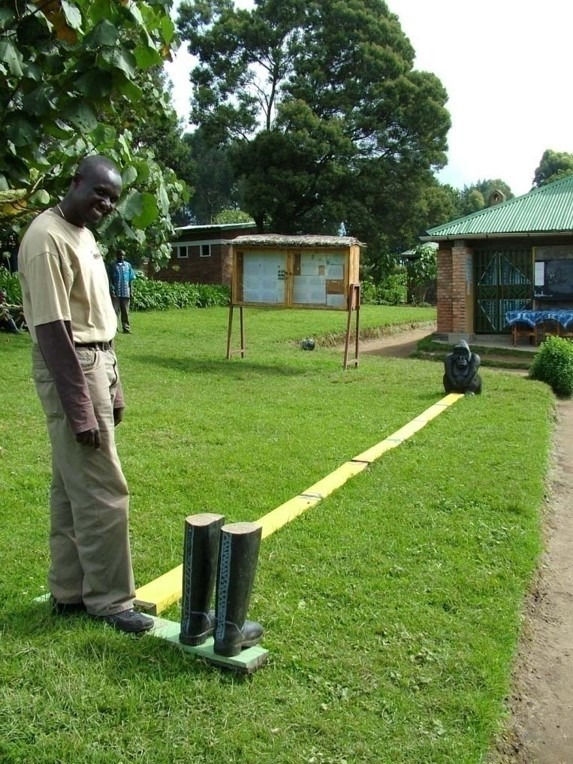
Illustrating the importance of maintaining a 10-meter distance from mountain gorillas — Dr. Jean Felix Kinani promotes safe and respectful tourism
“As a mountain gorilla doctor and guardian of their health, I often see videos on social media of people trying to touch, or being touched by gorillas. This behavior should be strongly discouraged to protect both humans and gorillas.
Touching gorillas is not a sign of love or connection — it’s a threat to their health. People, institutions must stop promoting this dangerous behavior online. Close contact with gorillas, as seen in many social media posts, puts both animals and humans at serious risk as illustrated in many of our publications. https://gorillahealth.org/research-on-human-and-non-human-primates/
As a mountain gorilla doctor, I urge everyone to respect the safe distance guidelines.
A magical encounter for tourists
For the lucky few granted the chance to trek into the mist and meet these gorillas face-to-face, the experience is nothing short of transformative. Tourists from around the world describe the encounter as deeply emotional even spiritual.
Following our recommendation on the gorilla health, each gorilla group is visited by only 8 persons and for only 1 hour per day. Exceptionally some researchers can spend 4 hours and always by respecting the distance of 10 meters. This ensure to prevents possible cross contamination diseases but also to reduce the contact and respect the gorilla group activities”.
After a guided trek through thick rainforest and steep terrain, visitors spend a golden hour in the presence of these majestic creatures. It’s an hour of silence, wonder, and connection. Seeing a mother cradle her baby, or locking eyes with a silverback who returns your gaze with surprising calm, leaves an imprint that lasts forever.
It is not just a wildlife encounter. It is a profound exchange between two species.